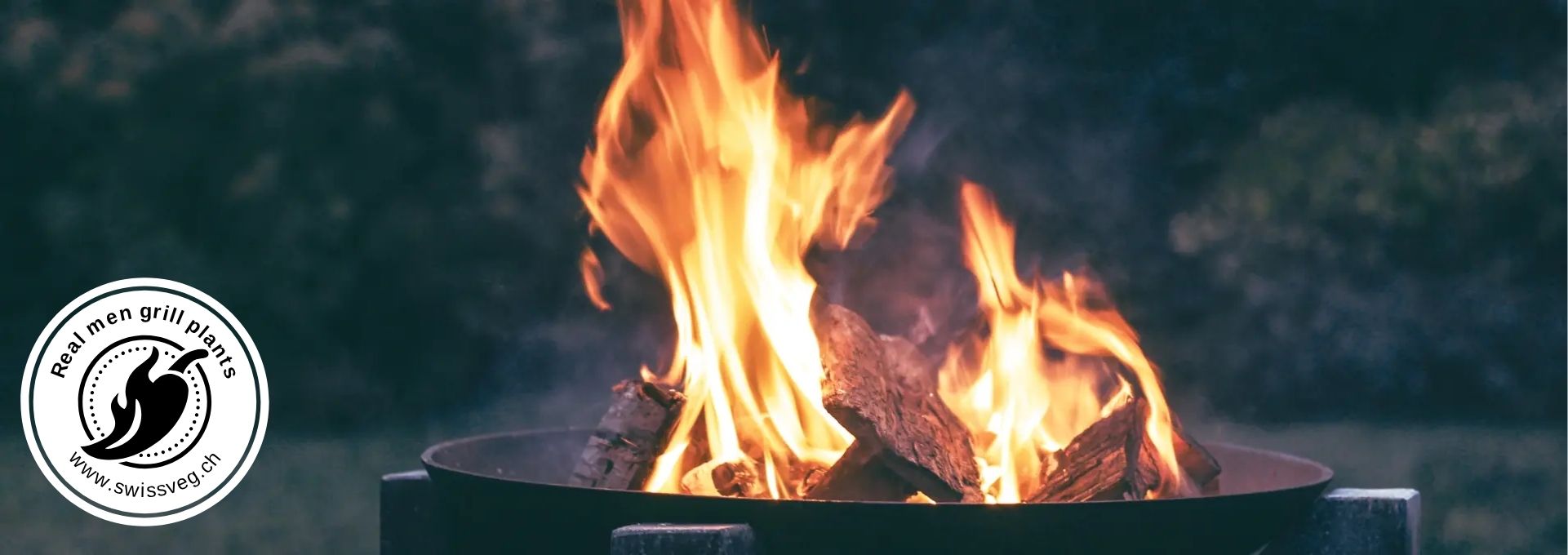
Fire has fascinated us for thousands of years. A flickering campfire, the soft crackling of wood, the dancing flames – all of this feels calming, almost hypnotic. Objectively, though, fire is a danger, and yet we feel safe in its presence, protected and often unusually relaxed. This apparent paradox is no coincidence. It is deeply rooted in our evolutionary history.
How it all began with fire
For our ancestors, fire was much more than a source of warmth. It extended the day, offered protection from predators, made food easier to digest, and enabled survival in colder regions. At the same time, it became a social centre. People gathered around the fire to share food, stories, and experiences. Over countless generations, these evenings in the firelight shaped how we live together, how we tell stories, and how we build trust. Traces of this still influence our behaviour and our feelings today.
When research looks into the flame
Today we know that this combination of sensory impressions and togetherness has a measurable effect on the body. It helps us wind down, lowers blood pressure, and promotes relaxation, especially when we do not only see the fire but also hear it. In one study, researchers showed volunteers different videos. Participants watched, for example, a fire without sound, a version with the typical crackling and flame noises, and neutral scenes without fire. Blood pressure was measured before and after each clip. The strongest effect came from the scene in which the flames were visible and the fire could be heard at the same time. This vivid mix of light, movement, and sound lowered blood pressure the most and helped people noticeably relax.1
Other work highlights above all the social aspect of the fire. Field studies among hunter-gatherer communities show that conversations by the fire differ from those held during the day. There is less talk about daily organisation and more about stories, shared memories, and topics that hold a group together. Recent research reviews also suggest that these evenings by the fire likely shaped our storytelling culture. Around the fire, people shared not only meals but also experiences and ideas. It was a training ground for language, empathy, and a sense of community, whose echoes we still feel today when we sit together by the fire.2
Why we still love sitting by the fire
Even though we no longer fear sabre-toothed tigers or sit in the dark without electricity, this ancient program inside us still runs. When we stand with friends by the fire, watch the flames, and listen to the crackling, our brain responds in a similar way as it once did: danger kept at bay, group present, food within reach, everything is fine. The campfire or grill becomes a modern successor to the Stone Age hearth, a familiar ritual that briefly takes us out of everyday life.
Perhaps it is precisely this special state that makes conversations by the fire so unique. People speak more slowly, listen more, and can share comfortable silences without it feeling awkward. The dancing flames give our gaze a calm anchor while the mind takes a breath. Fire creates a small space of closeness and connection. In this space, the question arises of what we want to preserve in this ritual and what can change over time.
A ritual in transition
For many people, grilling is part of these moments, firmly linked to summer evenings and long conversations. At the same time, more and more people are starting to question what actually ends up on the grill. Shared meals by the fire stand for closeness, exchange, and connection, and these values are difficult to reconcile with the suffering behind animal products from industrial slaughterhouses.
The ritual itself does not have to change. It is more about what we bring to it. Vegetables, plant-based alternatives, and creative grilling ideas can deliver just as much roasted flavour, variety, and enjoyment on the plate, while what matters most remains the same: sitting together, the crackling, the smell. What shifts is the decision behind it. Perhaps this is the next step in the evolution of an ancient instinct: not only to survive together, but to enjoy together consciously and to include other living beings in that consideration. The fire remains the same, but we can choose anew what we make of it.
- Lynn CD, 2014. Hearth and Campfire Influences on Arterial Blood Pressure: Defraying the Costs of the Social Brain through Fireside Relaxation - Christopher Dana Lynn, 2014. Evolutionary Psychology. Abgerufen am 16.04.2026, https://journals.sagepub.com/doi/full/10.1177/147470491401200509
- Wiessner PW, 2014. Embers of society: Firelight talk among the Ju/’hoansi Bushmen. Proceedings of the National Academy of Sciences of the United States of America, 111 (39), 14027–14035. https://doi.org/10.1073/pnas.1404212111